The first haul of farmed salmon in Britain was a relatively modest 14 tonnes, produced off the west coast of Scotland near Fort William in 1971.
For Unilever, the vast multinational that pioneered salmon farming, it was a triumph after years of experimenting with how to cage fish, battle against diseases and cope with the wild weather. Unilever had spotted in the 1960s that farming salmon, which until then was caught wild and remained a relative luxury, would create a mass market, lower costs and provide steady profits. By 1976, it had expanded into three Scottish sites producing 116 tonnes of fish each year.
Today the British farmed salmon industry – worth £1bn a year – produces about 205,000 tonnes of fish a year, and employs 2,500 people in Scotland.
In the decades since salmon farming was introduced, numbers of wild Atlantic salmon off British shores have declined by more than 70%, a depletion that should be a warning sign of significant environmental problems facing our rivers, coasts and seas which are only increasing as the oceans warm as a result of global heating.
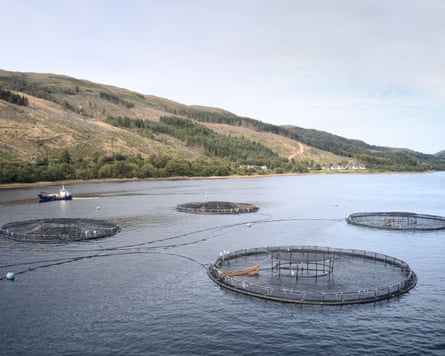
Simultaneously, industrial farming of Atlantic salmon in Britain, most of which is in Scotland, has been a commercial and consumer success. Salmon is ranked the most popular fish by British families – who consume 65,000 tonnes of it each year, drawn in by marketing material promoting it as nutrient-rich, protein packed and a good source of omega-3.
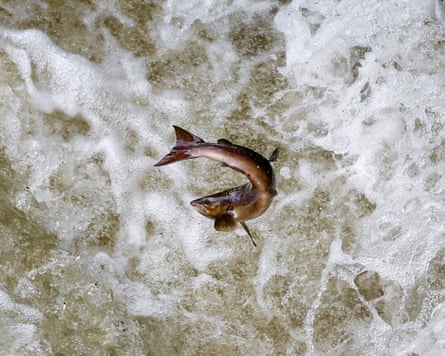
Many are unaware that the salmon they are buying, with its pale colour and white fat lines, is the product of highly intensified industrial farming, not a wild fish that swims freely in the ocean.
This week the Soil Association, an accreditation body, announced it was removing its certification of organic farmed salmon after 20 years. The association said an extensive review had found that environmental and welfare outcomes were not meeting its "high bar", and there was a lack of evidence that this could change fast enough.
Helen Browning, the CEO of the Soil Association, said: "When we started working on salmon 20 years ago, we had an aspiration for an aquaculture system that could deliver the principles of organic production in the sea.
"We envisioned a multi-trophic, enriched environment which could provide the resources for a good life for salmon, with minimal negative impact on other species. However, progress along these lines has been negligible … the evidence suggests that welfare and environmental outcomes are not sufficient for us to continue."
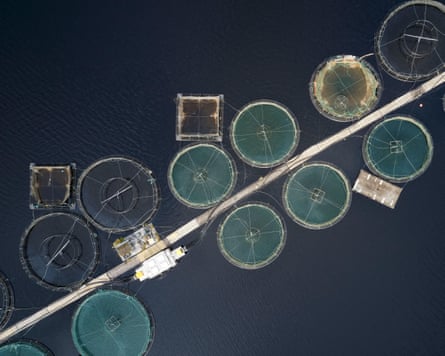
Salmon farming begins with the stripping of eggs from female fish to be artificially fertilised and incubated in controlled freshwater hatcheries. Once hatched, the young fish are moved when big enough to larger tanks, and then pens, before being transferred again at 12-18 months into sea water cages, where they are fed fishmeal pellets and treated with drugs to prevent disease.
Footage has emerged showing farmed salmon covered in blisters and sores – and in some images minus their heads – as a result of sea lice infestations, caused by high stocking densities. The use of chemicals to treat the lice, high mortality rates, and the environmental damage caused to wild salmon and coastal waters from disease and pollution are all reasons that a growing number of organisations are calling it out as inhumane and unsustainable.
Chris Packham, the naturalist and broadcaster, says the industry is catastrophic for fish welfare and the environment. More than 120 chefs representing 26 countries across six continents have signed an open letter created by the charity WildFish, saying they would keep ocean farmed salmon off their menus unless changes were made to existing farming practices.
Salmon farming, WildFish says, was and always will be antithetical to organic principles. It cites the use of harsh chemical pesticides and treatments such as formaldehyde to manage lice, pollution from the toxic chemicals and waste, high mortality rates and the unsustainable use as feed of wild fish, much of it sourced off the coast of west Africa, depleting the stocks there and straining food security for local populations.
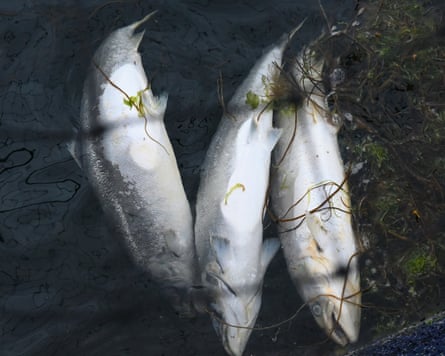
The Soil Association decision follows pressure from groups which argue its badge is greenwashing farmed salmon. WildFish has been asking the association to publish its salmon farm inspection reports for two years, via environmental information laws. The association has so far refused, despite being told by the first-tier tribunal to do so. But a two-year review by the Soil Association of its certified "organic" farms found concerns around suffering, and a high mortality rates on the sites, which were not significantly better than non-organic farms. In 2023, an unprecedented 17.4 m salmon died on salmon farms before harvesting.
Nick Measham, the CEO of WildFish, said of the Soil Association's withdrawal: "It is a start in exposing the environmental, sustainability and welfare disaster that is salmon farming."
The decision comes as some large salmon farms in Europe are starting to use ground-up poultry to feed their caged salmon as a cheaper alternative to wild fish.
Lerøy Seafood Group, one of Norway's biggest farmers and a supplier to Tesco, said it had now introduced chicken byproducts at all of its offshore salmon farms. Tesco said it worked with suppliers to source more sustainable feed and using poultry byproducts as feed for farmed salmon helped to reduce the reliance on marine resources.
Today, Unilever has long left the industry which is now dominated by four companies: the Norwegian company Mowi, Bakkafrost, a Faroese seafood company, Scottish Sea Farms and Cooke Aquaculture Scotland.
The industry and its income has many supporters in the British and Scottish governments. Desperate to promote growth, Andy Burnham, the prime minister, recently highlighted Scottish salmon as "our largest food export" and tied its success directly to his wider plan to boost the UK economy. And last year the British government allowed the industry to remove the word "farmed" from its labelling, after lobbying from the industry.
Salmon Scotland said the removal of the Soil Association logo did not mean a loss of organic certification by the British government.
"We have been assured by the UK government that our farms will continue to be assessed against organic standards with no loss of certification," a spokesperson said. "Consumers can therefore continue to buy Scottish organic salmon with confidence."
Addressing the accusations about environmental and welfare standards, and feed, the spokesperson said: "Scotland's salmon farmers operate to some of the highest standards in the world, within a highly regulated sector subject to more than 1,600 audits and inspections each year.
"The sector has invested more than £1bn in fish health, environmental performance and new technology, reflecting its long-term commitment to responsible farming. Survival rates remain high, while average sea lice levels remain low and are on a long-term downward trend."
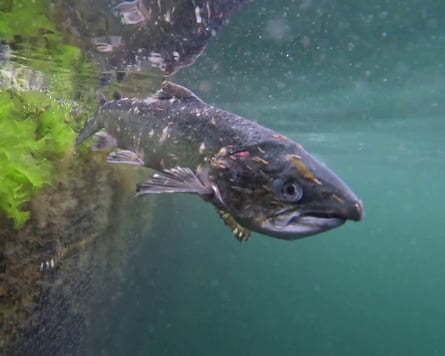
For campaigners, the Soil Association withdrawal sends a powerful message.
Tom Appleby, the head of governance and legal affairs for Blue Marine, said: "This is an incredibly important decision as it goes to the heart of the business model of salmon farming. Having the Soil Association brand supporting salmon farming gave it an odour of sanctity.
"We don't tend to farm carnivores. Salmon are a very complex species with a natural range of thousands of miles – which creates all sorts of intrinsic issues, particularly around fish health and mortality."
"How did we get here?" asked Measham. "People perceive salmon to be healthy, but the industry has gaslit consumers, it is a complete con." Now the Soil Association has pulled out of certification, it must publish its inspection reports to provide full transparency, he said.
A Soil Association Certification spokesperson said it was continuing an appeal against the requirement by the first-tier tribunal to publish the inspection reports: "We look forward to presenting our case and in the meantime the decision is suspended … As ever, we are committed to transparency and ensuring that data requests are handled in the appropriate manner."