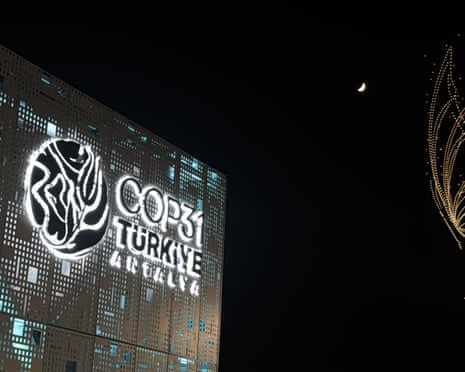
The Cop31 climate summit in Antalya is in its final days, and negotiators are fighting over a first draft of the deal.
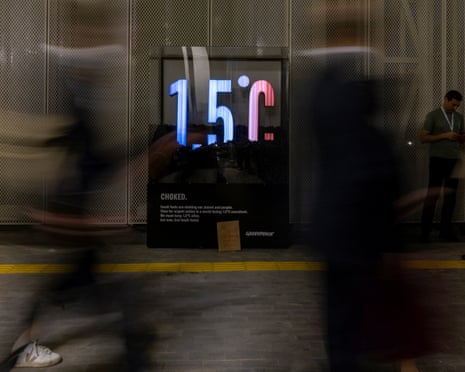
It calls for "accelerated action to phase out fossil fuels, including through the immediate transition away from fossil fuels in energy systems", and for tripling adaptation finance for poorer countries. But with the world heading past the 1.5C limit and countries deeply divided over finance, adaptation and the "just transition", can Cop31 deliver anything that matters?
The Guardian's environment editor, Fiona Harvey, reported that the 18-page draft contains 144 separate items, many of which are unlikely to survive: "There are still at least four and a half days of heavy negotiating to go, so this text will go through many more iterations." Campaigners are sceptical. Tzeporah Berman of the Fossil Fuel Non-Proliferation Treaty Initiative said: "This mention in the draft text will last about 2 minutes and they know it."
Ministers have now arrived in Antalya to start cutting the text down. Chris Bowen, the Australian minister presiding over the talks, admitted: "The first draft will look very different to the final draft."
At the opening leaders' summit, Hilda Heine, president of the Marshall Islands, warned: "Our response to the threat of overshoot must be overwhelming, or the world we know is over." The UN secretary general, António Guterres, put it more bluntly: "It's make or bake time." Yet only 91 national leaders attended, and Donald Trump and Xi Jinping were among those absent.
The Guardian's editorial argued that those pushing for a faster shift away from fossil fuels "are on the side of the future, while their opponents are stuck in the past".
What do you want to know about what's happening in Antalya? Can a summit co-hosted by an oil-producing Turkey and a coal-exporting Australia get a fossil-fuel phaseout over the line? Is 1.5C now out of reach, and what does "overshoot" really mean for the countries most at risk? And with the US government absent, who is leading?
Fiona Harvey and Ajit Niranjan will be live here at 5pm GMT (12pm EST) on Tuesday, 17 November to answer your questions on the talks, the draft deal and what comes next.
Post your questions in the comments below or email conversations@theguardian.com
LeeBirch asks: Will future Cop meetings be disrupted by climate breakdown?
As far as I'm aware, no Cop has yet been seriously disrupted by violent weather, though in some recent years storms and floods have hit venues and affected transport links. This is partly because of the sporadic (but increasingly severe) nature of extreme weather events, but also because the most vulnerable nations cannot afford to host such a big event.
There are also some indirect effects. A lot of the disruption happens behind the scenes. The costs of sending a delegation to Cop are already high, particularly for small and vulnerable nations, and many of them have seen their public finances grow more strained as climate disasters worsen. It sounds trivial, but even the price of the coffee that delegates drink to stay awake through late-night negotiations has been pushed higher by global heating.
FanaticKestrel asks: I want to know how many tonnes of CO2 were spewed into the atmosphere travelling to and from this Cop event and the feeding of the thousands of delegates, for something that no one will really follow and or implement until Cop32 when it'll be rinse and repeat.
: Aren't these conferences just a huge waste of resources and a producer of carbon dioxide as thousands of people from around the world travel to and from them? Those in attendance never accomplish anything because whatever they recommend is ignored by all governments in the world.
We already know what happens when countries don't meet face to face. During Covid, in April 2021, we had a White House summit on the climate, which world leaders from Vladimir Putin to Boris Johnson attended virtually. It was nice, but all that happened was that leaders turned up, gave their prepared statements to camera, and turned the cameras off again.
Real progress is made in face-to-face negotiations. As to whether climate conferences achieve anything, I've written extensively on this here. But here's a quick rundown for people who think climate conferences don't achieve anything.
Before Copenhagen in 2009, we were headed for 5C of heating, which would transform the world and leave billions dead. Pledges made at Copenhagen bent that curve downwards. After Paris, we bent the curve still further, with the world then headed for 3C of heating if the Paris pledges were fulfilled. At subsequent Cops, with subsequent pledges, we have got to 2.7C of heating on current policies, and 1.8C if countries go to the maximum of what they're saying they will do.
So these pledges do have an impact, and they come from face-to-face conferences where people sit round a table and thrash out these issues, instead of just retreating into their entrenched positions and their limited conceptions of their own "national interest".
Real-world action also follows Cops. It's hard to imagine we would be seeing so much renewable energy generated around the world, and so much development of low-carbon technologies such as electric vehicles, if we had not been meeting each year to discuss the climate.
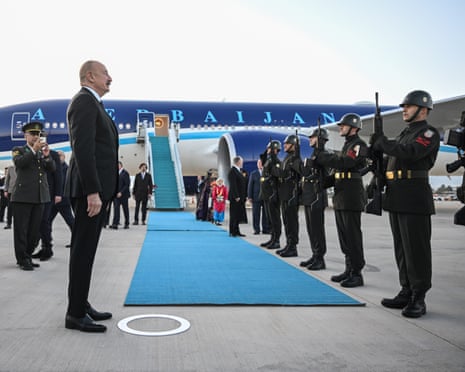
Flights are terrible for the planet, but of all the reasons to fly, saving lives is top of the list for me – whether that's doctors meeting for a cancer conference or diplomats meeting for a climate one. Antalya, where Cop31 is taking place, gets more than 15 million foreign visitors each year. The emissions from the 100,000 delegates travelling there for Cop pale in comparison to those from tourism.
Whether it's worth it still depends on whether the negotiators actually achieve something, but I think to make the comparison properly, you must weigh up the emissions against the likely benefits. Cop processes have not stopped climate breakdown, but the agreement in Paris to hold global heating to 1.5C by the end of the century has, in the eyes of most experts I've asked about this, certainly helped boost the shift away from fossil fuels. Subsequent negotiations have helped get more money from rich polluters to poor and vulnerable nations, and on a bunch of smaller but still significant issues, the Cop process has helped push the world towards progress.
There is a meaningful caveat to the above: the signal that is sent by flying. Social scientists have found people are less likely to trust high-profile figures on climate if they don't walk the talk.
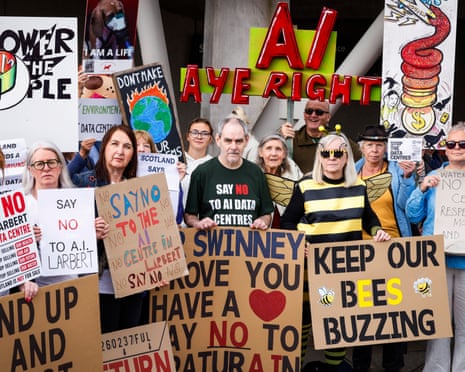
Ignoto asks: It seems strange that the AI datacentres and our environmental problems run on parallel tracks, usually not mentioned in the same breath. Why is not more focus put on the complete environmental disaster AI is paving the way for? We are supposed to save energy for everything but AI. Is ceasing to think for us humans worth so much?
An AI pledge has been proposed here at Cop31, but countries have been reluctant to sign up as they're not quite sure how it would work in practice. AI does not have to be done in the most environmentally harmful way possible – that's a choice, and while companies may always try to do things cheaply and get away with bad behaviour, it's the job of governments to regulate them. So it is not beyond the bounds of human inventiveness to conduct AI and its datacentres without totally destroying the planet, though companies might have to pay more to do so.
Yes, there is a huge disconnect between governments' headlong rush into AI – and the increasingly large datacentres that boom requires – and their stated commitments to stop the planet from heating. As my colleague Damien explained on our Cop31 liveblog earlier today, citing analysis from Lighthouse Reports, almost 500 people at the summit are from corporate groups and companies involved in the AI buildout. Though AI is not on the official agenda, yesterday the Turkish presidency published a voluntary "Antalya AI pledge" to encourage nations to commit to assessing the growing environmental risks of the technology, while tapping its potential for finding climate solutions.
What is sorely missing from the discussion around AI, in my mind, are the emissions that AI enables. Even some climate groups tend to weigh up the energy costs of AI (large, and often reliant on fossil gas generators or simply dirty power grids) against the potential savings it could bring by contributing to a cleaner economy (for instance, by optimising power grids or boosting research). The latter is a meaningful benefit, but few have applied the same logic to how AI is helping the fossil fuel industry drill more oil, or encouraging more consumption. Peer-reviewed research that I've covered suggests AI-driven productivity gains enable more climate harms than they avoid.
Melesmeles80 asks: Is carbon capture going to be mentioned in the final statement and is this actually a plausible and effective measure, or just a scientifically-dubious free pass to keep drilling?
Yes, carbon capture may well make it into the final text, because some countries want it. The issue is that we are now in overshoot of the 1.5C limit set out in the Paris agreement, and there is no way of getting back to 1.5C without measures to take carbon from the air. This could include carbon capture and storage, direct air capture, and natural measures such as planting trees and restoring peatlands and soils.
The IPCC thinks we will need carbon capture and storage, so we had better try to make it work. If including language on carbon capture and storage is the price of getting some recalcitrant countries to join any deal at Cop31, it is probably worth it.
The draft released yesterday contained so many elements that it's hard to gauge what exactly will make it into the final text, and I don't know enough to speculate. Will carbon capture help keep the planet from baking? I certainly hope so. There is a lot of scepticism around carbon capture. Some of it is grounded (fairly, in my view) in the fossil fuel industry's extensive history of overpromising and underdelivering on its deployment, and some of it (unscientifically, I would say) dismisses it out of hand. But the technology itself does work, and in some industries, such as cement, engineers consider it the most promising option available today.
Scientific roadmaps to a clean economy suggest we need far more carbon capture and storage than is now in the minuscule project pipeline, for factory-level industrial emissions and for the distinct but related process of sucking carbon dioxide out of the atmosphere and burying it underground. The pertinent question to me is how much polluters are forced to clean up their mess and which projects get public support. Capturing carbon from gas-fired plants is a huge waste of money if you're a country that hasn't even built wind turbines or solar panels. Using the technology to clean up industrial emissions – while also cutting demand for the end products, recycling more and taking all the other easy wins that are often ignored – might just about get us to 1.5C.
JontyG asks: We tend to only hear the headline of carbon emissions negotiations, as if that is the sole measure of Cop success. I have friends/colleagues at Cop working on methane, zero waste, and wider scientific research. What are the progress of the less high profile negotiation streams, and what breakthroughs could be possible?
The cover decision includes a wide range of topics – it's 18 pages long and has 144 separate items. Methane is included, and zero waste is one of the topics that the Turkish hosts are particularly keen on. As well as the formal negotiating agenda under the Paris agreement, Cops have an "action agenda", which has a roster of voluntary commitments, and discussions of issues such as waste often take place under that banner. On the issue of scientific research, there is a row over the next assessment report from the Intergovernmental Panel on Climate Change, which some countries want to delay.
David_Bond asks: The newfound climate cowardice of the EU (especially in no text proposal for climate finance work programme). How much of this is what happens when lofty EU climate rhetoric no longer has the perennial blockade of US obstruction and now faces an actual cost to its soaring promises of a few years ago? And how much is growing presence and pressure of far-right political parties in Europe (who've made a platformed point of demanding no public funds be spent elsewhere)?
The EU is still one of the key blocs at Cop, with a strong track record in cutting greenhouse gas emissions, and pioneering means of doing so. The EU has some of the world's most stringent commitments on cutting carbon, and provides the lion's share of climate finance to the developing world.
Much of the EU's climate backsliding in recent years – after the Green Deal years of Ursula von der Leyen's first Commission presidency – has focused on domestic action rather than international efforts. And while far-right parties have indeed gained ground across much of the continent in recent years, all of whom oppose climate action and some of whom campaign strongly to cut foreign aid budgets, I suspect the bigger issue is simply shifting priorities. Climate, as a topic, has become less salient for the European public, while inflation and war have taken a bigger place in political discourse. For national governments, climate finance has been one of the easier parts of the budget to justify cutting at home.
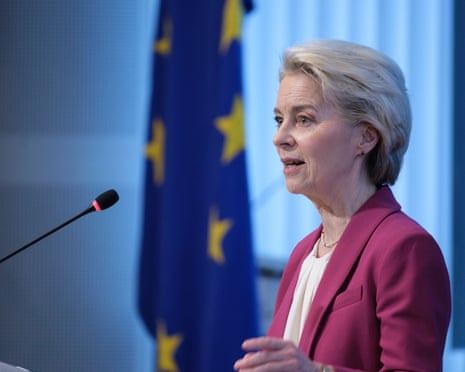
: 31 years of this talking shop and in that time the climate crisis has dramatically worsened … What's the point?
: Has Cop ever achieved anything? Why is it allowed to be stuffed with fossil fuel lobbyists?
On this front I think Cops get a bit of an unfair reputation. If you look at the terrifying rise in atmospheric CO2 concentrations over decades, all while diplomats have jetted off to climate conferences, it can be easy to conclude that they're a load of hot air. But the counterfactual – what would have happened if we didn't have them – rarely gets discussed. At the broadest level, the global average rise in emissions masks cuts in the rich world (which, yes, are too slow to meet their promises) amid increases in the developing world (some of which would be inevitable as countries get richer, some of which could have been easily avoided, and some of which could have been spared if rich polluters had helped out with more cash). If you see Cops not as a place to solve the climate crisis but as a venue to speed up action – whether setting a signal, like "don't let the planet heat more than 1.5C by the end of the century", or getting more money to poor countries being battered by violent weather – then it makes more sense.
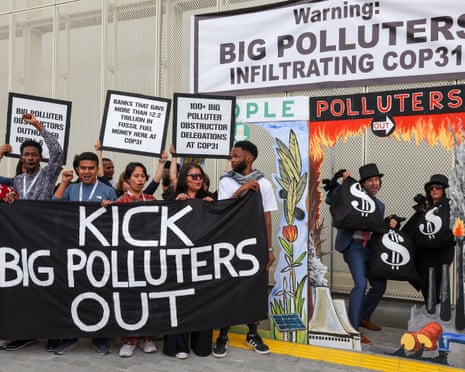
The presence of fossil fuel lobbyists on the sidelines is terrible for the reputation of the summits, but I suspect the damage corporate lobbyists can do by sending a team is fairly limited. The real negotiations take place behind closed doors, and it is the governments that have been captured by fossil fuel interests that wield the power to frustrate negotiations.
I've written extensively on this here.
Tiggerish asks: For countries that are willing to be part of the future and make serious efforts to meet climate goals, why do they need the consensus of the feet draggers? Yes, the rest of the world moving on with climate action lets these environmental vandals off the hook, but unless we say, you know what, we're doing this with or without you, nothing at all will be done by anyone. I would rather the UK's position was that we'll do whatever it takes, and work with any willing partner to reach net zero and to hell with what the US and Saudi Arabia thinks.
Any country that wants to go ahead can do so. There's nothing stopping them. Cops, however, are the only forum in which the poorest countries get to be in the same rooms as the biggest countries that are causing their climate problems. That universality is a powerful force.
Some of this does happen on the sidelines. At every Cop, there are a flurry of voluntary pledges that take place outside the main negotiations, whether that's countries promising to pump less methane into the atmosphere or to kick coal out of their power systems. The Global Methane Pledge, for instance, was launched five years ago and has since been signed by 159 participating countries and the European Commission – 80% of the parties to the Cop process.
But there are still benefits from ambitious countries working to raise the bar for all, as it means even those least interested in preserving a habitable planet sign up to something that – depending on how free their society is – they can be held to account over. And nothing stops a country from moving faster than the statements they can reach consensus on at climate summits.
How much appetite is there for truly ambitious change? Well, one of the most important movements, the Beyond Oil and Gas Alliance, only counts about a handful of countries among its core members, a few of which are small island states with negligible emissions.
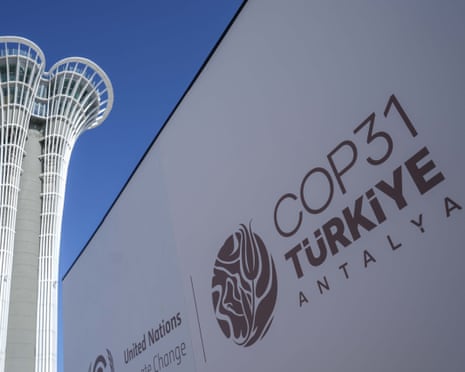
The Cop31 climate summit in Antalya is in its final days, and negotiators are fighting over a first draft of the deal.
It calls for "accelerated action to phase out fossil fuels, including through the immediate transition away from fossil fuels in energy systems", and for tripling adaptation finance for poorer countries. But with the world heading past the 1.5C limit and countries deeply divided over finance, adaptation and the "just transition", can Cop31 deliver anything that matters?
The Guardian's environment editor, Fiona Harvey, reported that the 18-page draft contains 144 separate items, many of which are unlikely to survive: "There are still at least four and a half days of heavy negotiating to go, so this text will go through many more iterations." Campaigners are sceptical. Tzeporah Berman of the Fossil Fuel Non-Proliferation Treaty Initiative said: "This mention in the draft text will last about 2 minutes and they know it."
Ministers have now arrived in Antalya to start cutting the text down. Chris Bowen, the Australian minister presiding over the talks, admitted: "The first draft will look very different to the final draft."
At the opening leaders' summit, Hilda Heine, president of the Marshall Islands, warned: "Our response to the threat of overshoot must be overwhelming, or the world we know is over." The UN secretary general, António Guterres, put it more bluntly: "It's make or bake time." Yet only 91 national leaders attended, and Donald Trump and Xi Jinping were among those absent.
The Guardian's editorial argued that those pushing for a faster shift away from fossil fuels "are on the side of the future, while their opponents are stuck in the past".
What do you want to know about what's happening in Antalya? Can a summit co-hosted by an oil-producing Turkey and a coal-exporting Australia get a fossil-fuel phaseout over the line? Is 1.5C now out of reach, and what does "overshoot" really mean for the countries most at risk? And with the US government absent, who is leading?
Fiona Harvey and Ajit Niranjan will be live here at 5pm GMT (12pm EST) on Tuesday, 17 November to answer your questions on the talks, the draft deal and what comes next.
Post your questions in the comments below or email conversations@theguardian.com