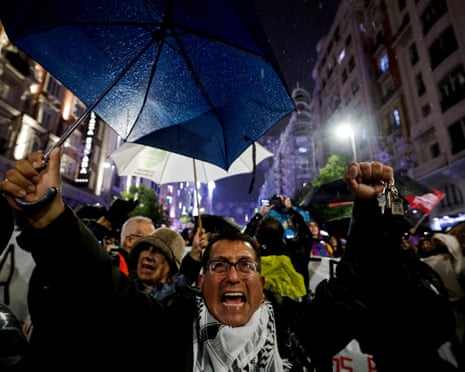
in Madrid
Good afternoon from Madrid as Spaniards are voting in a high-stakes snap general election that could put a far-right party in government for the first time since the country's return to democracy after the death of Gen Francisco Franco in 1975.
Spain's socialist prime minister, , is widely expected to lose the election he called in October, with conservative opposition leader set to end his eight years rule and take over as the PM in a coalition with far-right anti-immigrant Vox party – at least if the polls are to be believed.
It's perhaps worth noting that the polls have been wrong in the past, and Sánchez focused his efforts in the last few days on mobilising the disenchanted left-wing voters in a hope of pulling another upset – with some indications that there might be movement in his direction. But could it somehow be enough? But can he do it again?
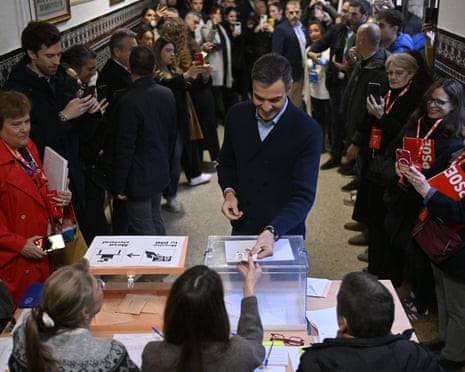
The polls opened 9am local time and will close at 8pm (that's 7pm in Britain), when we are going to get first polls from the last few days. Partial results are expected later tonight, and we should get a clear idea of who's going to rule Spain for the next few years before we go to bed.
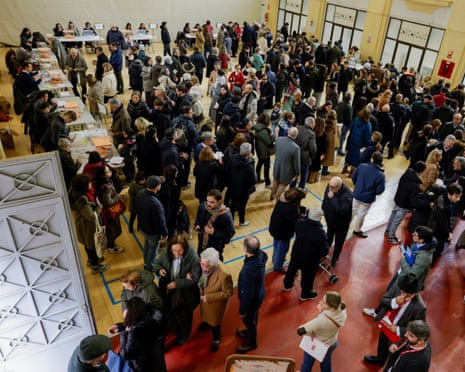
Join us as we are building up to the polls closing with all the background story you need to know, and I will later bring you every poll, comment, and analysis you need to know what's going in Spain.
It's la fiesta de la democracia.
Ready? Vamos.
in Madrid
Sánchez's progressive policies on some contentious issues often put him at odds with other EU leaders, including even some fellow socialist governments.
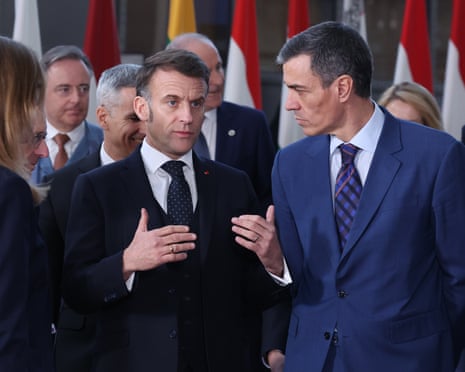
For example, he repeatedly clashed with Denmark's Social Democrat leader and prime minister over his migration policies, including plans to "regularise" the residence of hundreds of thousands of migrants.
Last month, she spoke of her frustration that "one country is doing almost everything in the opposite direction of what the others are doing." "In other words, you come to a country illegally, and suddenly you're allowed to be there legally," she told reporters.
Frederiksen was among the most vocal critics of Spain in the aftermath of the Ceuta crisis, alongside Italy's Giorgia Meloni. Spain and Italy even briefly suspending the free travel zone between each other as a result of mutually escalating political rhethoric over crisis – a decision only reversed in late October.
Sánchez also drew some criticism over his refusal to ramp up its defence spending to the 5% target, as he insisted the focus should be on specific measures, not arbitrary numbers. But some countries, particularly on the eastern flank of Nato, saw that as a lack of solidarity with their plight amid growing threat from Russia.
Spain also adopted one of the more "hawkish" positions on Israel, alongside Ireland and Slovenia, regularly calling for further sanctions against Israel over Gaza, in contrast with much more cautious approach from some of the heavyweights such as Germany and France.
– who at one point even threatened to cut off all trade with Spain – in sharp contrast to the more, conciliatory approach of several other EU leaders.
Over the last month, as he battled the campaign at home, his voice was less prominent in Europe as he skipped EU summits in Dublin and Brussels.
European community affairs correspondent
in Madrid
If Sánchez gets replaced by a coalition led by the PP and the anti-immigrant Vox, it would mark a sharp reversal for a country whose progressive initiatives have catapulted it on to the global stage.
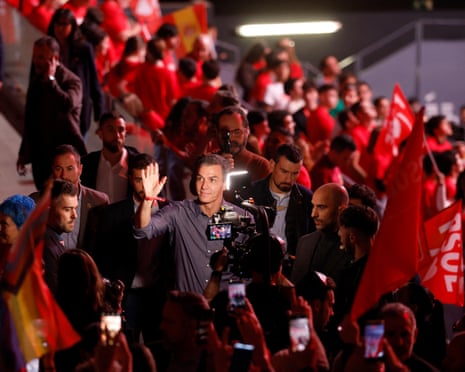
Sánchez vociferously pushed back against Donald Trump's war in Iran, adding to his rejection, months earlier, of Trump's demand for Nato states to increase their defence spending to 5% of GDP.
In June last year, Sánchez was the first senior European leader to accuse Israel of genocide in Gaza. And as countries across Europe harden their stance on migration, Sánchez championed it as a choice between being "open and prosperous" or "closed-off and poor", announcing plans to allow undocumented people already living in Spain the opportunity to regularise their situation.
When Sánchez came to power in 2018, many of his stances would not have been considered out of place in Europe, said the head of the Madrid office and policy fellow at the European Council on Foreign Relations.
"But the Europe of the last couple years has swung quite significantly towards the right, so on a lot of the positions he's been taking, he's become an outlier."
There are very different perceptions of Sánchez internally and externally, and it obviously depends on your political leanings.
If you're left-wing, you're going to be very pleased that he stood up to Donald Trump, that he's talked about immigration, he's talked about equality, the showed a kind of commitment to progressive politics generally.
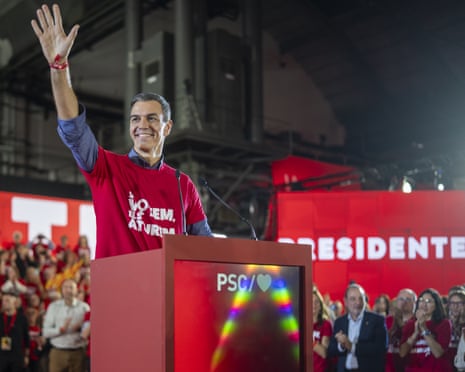
Sánchez is a smart guy, he knows what he's doing. He knows if he riles and Trump gets angry, it's going to play very well with the folks back home in Spain that support him.
But if you're on the right, you'll disagree entirely. You'll say, this man is, he's reckless, he's irresponsible. You don't keep the remaining superpower of the US offside, and don't annoy Donald Trump – that's not a good thing to do. Similarly, on immigration.
As mentioned earlier, the four major party leaders all cast their votes already earlier today (17:30).
Take a quick look:
in Madrid
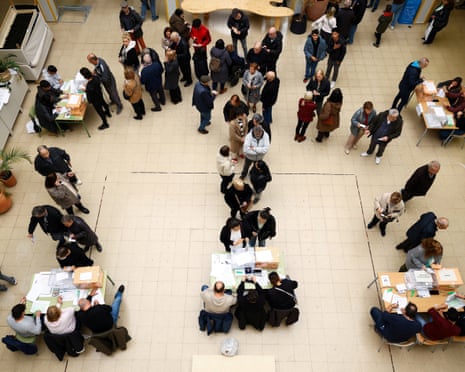
Given the remarkably high turnout being reported by authorities, it feels like a good moment to note that none of the polls estimated turnout to be this high with over 68% by 6pm (18:11) – and it will inevitably have a significant influence on the result.
Or, in short, this level of mobilisation means pre-election polls are likely to be a bit off.
If only I could tell you which way!
So far, there is no immediately obvious pattern in the data, at least as far as I can tell.
Leading the opposition is Alberto Núñez Feijóo, the leader of the conservative People's Party.
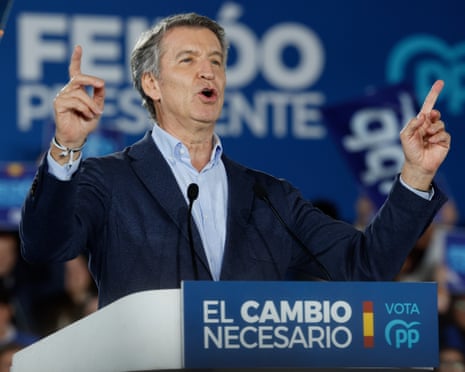
He's a bit older than Sánchez – he's 65 – and was in charge of the northwestern region of Galicia for a long time.
According to the ancient but enduring cliche, Galicians are very, very difficult to read. A seasoned adviser – who mentions the old joke about how hard it can be to determine whether a Galician is going up the stairs or coming down them – argues Feijóo is too thoughtful to fit naturally into a world of Twitter, soundbites and gotchas.
When he became the leader of the Partido Popular a few years ago, his pitch was: "I'm going to bring the party back to the centre. Let's not have this race to compete with Vox; we've got our own values."
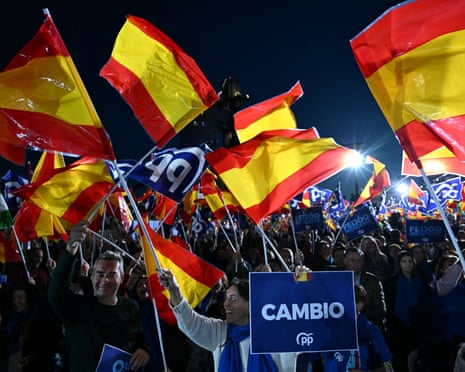
His team would probably agree he's not the most charismatic or exciting politician on the face of the earth, and certainly he looks even less so if you put him side by side with Pedro Sánchez.
But his followers, his supporters, his team would say: he's a safe pair of hands. This guy showed he can govern a region; he's going to be kind of no drama style of politics.
It's quite interesting that Sánchez and Feijóo have been having these digs at each other. Sánchez argued he's an internationalist who cares about Spain's image and reputation abroad, and Feijóo said he'd learn English, but then he's recently argued: I don't need to able to speak English. I know how to govern.
"Spain deserves a decent prime minister and [Sánchez] isn't one," Feijóo told viewers during a head-to-head debate between the two men last week.
The PP is promising to lower taxes, build 1m homes, and "restore the country's ambition and self-esteem."
But their prospective coalition partner Vox's manifesto includes plans to have Sánchez and his government prosecuted "for treason and crimes against the security of the state" over the Ceuta mass crossing, focuses on deregulation, "remigration" and giving Spanish-born people priority over those born abroad for housing and public services.
Although the PP's previous leader, famously repudiated Vox and its ideology, accusing the party of practising a politics based on "fear, anger, resentment and revenge", the PP has repeatedly entered into regional coalition governments with Vox and now runs four of Spain's autonomous regions with the party.
European community affairs correspondent
in Madrid
At home, Sánchez and his leftwing deputy prime minister had consistently demonstrated how progressive politics could heighten affordability, said an economist with the University of Massachusetts Amherst and the author of Anti-Fascist Economics.
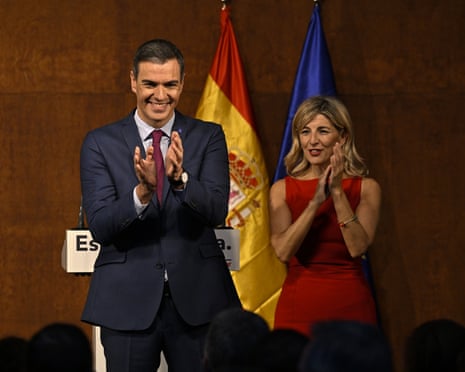
Pedro Sánchez and have shown to the world that an anti-fascist economics is possible," she said.
She listed off examples, from the 75% increase in the minimum wage since Sánchez came to power in 2018 to making some train journeys completely free and the government's ambitious build-out of renewable energy.
The combination was "effective anti-fascist economics in response to the global energy crisis", said Weber. "And has delivered growth at the same time."
His government's achilles heel, however, was probably access to housing, she said, in a nod to the soaring costs that have sent hundreds of thousands of Spaniards into the streets in recent months and left many voters turning their back on the socialist-led government.
The frustration laid bare that the economic growth under Sánchez had only partly translated into a sustained growth in people's living standards, said a political scientist with Madrid's Complutense University.
While the social-democratic principle of harnessing capitalism and spreading its riches had worked to an extent, it had been Gerbaudo said.
Sánchez insisted that while he had made errors, Spain was in a better state than it was when he came to office in 2018.
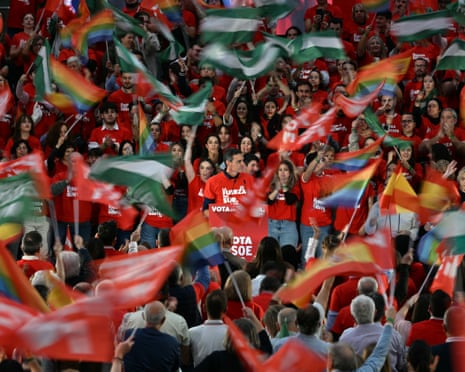
"My government hasn't been perfect; I've made mistakes," he said. "But I'm also fully aware that we have always governed in the right direction."
The prime minister has also sought to depict the snap election as a stark choice between progressive forces and reactionary ones – as typified by the PP's putative alliance with Vox.
"You must decide whether you want our country to move backwards or continue moving forwards, and whether you prefer a government that works for the interests of the majority of society," he told Spaniards as he announced the vote.
Over recent days, the government has tried to underline its commitment to social justice and equality by proposing a new tax on fortunes of more than €100m (£84m) that would help fund childcare, housing and public services.
Choosing housing as a key battleground allowed Sánchez to attempt to shift the focus away from the corruption allegations facing his inner circle.
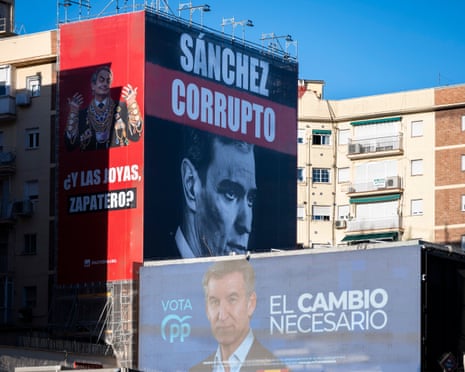
Sánchez's administration, party and inner circle have been mired in corruption allegations over the past two years, which have proved acutely embarrassing for a prime minister who took office vowing to be a scourge of sleaze and graft.
The PP and Vox are using the poll as a referendum on what they disdainfully refer to as "". They argue that the style of government favoured by the prime minister and his allies is cynical, corrupt, opportunistic and self-serving.
In July this year, the prime minister's brother, David Sánchez, was banned from holding public office for nine years after being found guilty of administrative misconduct relating to his hiring by a socialist-led council in the south-western region of Extremadura.
Meanwhile, Sánchez's wife, Begoña Gomez, is due to face trial after a judge charged her with embezzlement, influence peddling, corruption in business dealings and misappropriation of funds at the end of a two-year investigation.
David Sánchez and Begoña Gómez have both denied any wrongdoing, and the prime minister has previously accused his political and media enemies of launching a "harassment and bullying operation" against his family.
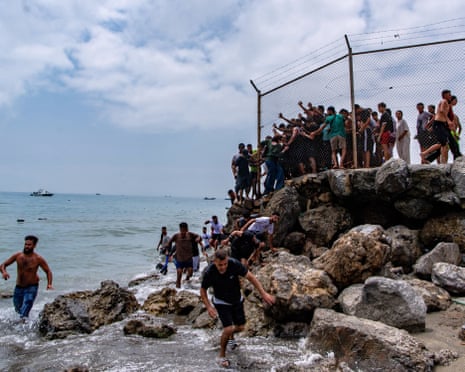
It also offered him the chance to move on from his government's much-criticised handling of the crisis in Spain's north African territory of Ceuta, which was sparked when about 80,000 people crossed into the territory from neighbouring Morocco in the space of 48 hours.
The housing crisis was a key part of Sánchez's original decision to call an election, with the public outraged caused by the case of María del Carmen Abascal, 87, who was evicted from her home, on a stretcher, after being given 30 minutes to gather her belongings.
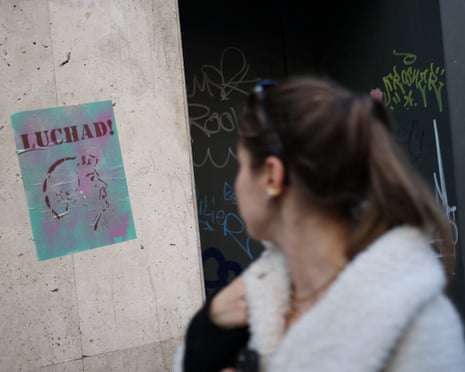
'Maricarmen' quickly the symbol of a long-running housing rights movement, with her death just days after the snap election was called only adding to the prominence for this issue.
"There's long been this simmering anger over housing, and it just kind of exploded into view a couple of months ago and kind of snowballed into a bunch of factors that led to this snap election.
And when you go to these protests, people are really angry. It's incredible.
Some of these statistics: you would need 97% of a young person's average salary to rent a place in Madrid. I mean, it's... impossible."