hen Simran and her older brother were growing up, he was always the golden boy. He brought home A* grades and basked in their parents' praise, while she was the rebel, scolded for bunking off school. So it's ironic, she says, that in middle age she became the dutiful daughter, giving up a career she loved to care for their ailing parents while her brother lives what seems to her a remarkably carefree life overseas.
"It's funny how the tables have turned," she says. "The person they spoiled is the person who has never been there for them, never even bought my mum and dad a birthday card. I had dreams and ambitions of things I wanted to do, but I can't pursue them now."
While her brother is married with a family, Simran, in her 40s, is single and living with their parents. Her father is showing what she suspects may be early signs of dementia, while the after-effects of cancer treatment have left her mother frail and anxious about going out alone in case she falls. The only time Simran has to herself, she says, is at the gym – though even there, she ends up on the phone making medical appointments. She says her brother has never considered that she might need a bit of respite. "He's never said to them: 'Come and stay with me for a bit.' Even my mum says to me: 'We haven't done half as much for you as we have for him, and yet you are the one caring for us.'"
As a woman of south Asian heritage, Simran says she is also battling an extra cultural expectation that she will look after her parents. "I had a friend say: 'But you are really blessed to have to do ,'" she says, referring to the Sikh tradition of selfless service for others. "And I say: 'Blessed in what way?' Of course I want to be there for my mum … but people don't get it unless they're a carer, how lonely and isolating it is, how it affects your mental health."
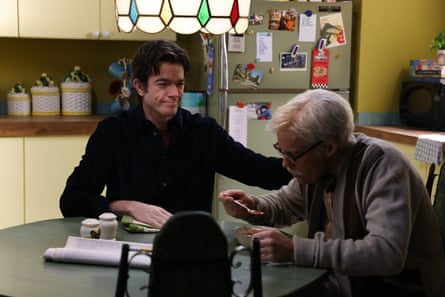
Though perhaps they get it a little bit more after the American Saturday Night Live skit Sister, satirising the way women are often trapped into caring roles, went viral recently. Framed as a spoof pharmaceutical ad, it featured comedian John Mulaney playing an adult son fretting about how to get good care for his elderly dad, so that he can get on doing things he enjoys. Enter the miracle product: Sister, an exhausted-looking middle-aged woman. "Simply text 'Dad fell' to Sister, and she will quit her job, break her lease, and move halfway across the country to take care of him!"
That struck a painful chord with Simran – "I thought: 'This is my life,'" she says – but also with plenty of other women. According to the charity Carers UK, 59% of unpaid carers in England and Wales are female. While men tend to start caring later in life, often for a spouse, women are more likely to start in middle age, with almost one in five of them aged 55-59 shouldering caring responsibilities. Though obviously it's not only sisters who end up feeling unfairly burdened – while researching this piece I spoke to plenty of brothers equally exasperated with a sibling's failure to pull their weight, of which more later – the gender gap is striking.
But why does so much care fall to certain siblings? TikTok is rife with theories about #eldestdaughtersyndrome, the idea that female firstborns are over-achievers programmed from birth to carry everything on their shoulders, and it's striking how many of the overburdened carers I speak to for this article – men and women – are elder siblings.
Sarah, the oldest of four sisters, realised during the pandemic that their parents were struggling. A series of falls and emergency hospital trips requiring "a lot of rushing back and forth" prompted Sarah, whose job as a librarian was already on hold during lockdown, to decide to quit her job when the library reopened, giving her the flexibility to drop everything in a crisis.
She doesn't, she stresses, blame her siblings for what was entirely her decision, and would hate them to think she is complaining now. But in retrospect, she questions why she expected so much of herself. "My siblings were able to have that broader perspective on it and think: 'No, this is my job – we'll have to work around that.' Whereas I felt an extra feeling of guilt somehow." When I ask why, she traces it back to being the eldest: "You can't pin it down and say that somebody said to me, 'You are the eldest and you have to do this.' But there were four of us, we were close in age, you did end up babysitting the younger ones."
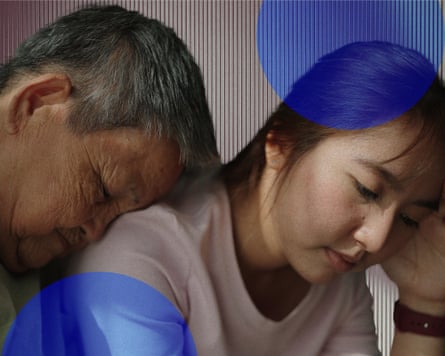
It's worth pointing out that it's not always eldest sisters who can feel unfairly lumbered, as the realities of caring for elder parents bring all sorts of buried sibling resentments to the surface. Rob and his younger brother both live several hours' drive from their widowed mother. When it became clear she needed looking after, says Rob drily, his brother was "very keen not to offer". So Rob decided to move her in with him and his wife, while they found her sheltered accommodation nearby. What he hadn't realised was that he would also have to take care of packing up her house, pursuing a formal diagnosis of what turned out to be dementia, and the spiralling workload as she deteriorated. "You've got to do the shopping, the cleaning … she was a fairly capable woman, but suddenly any adversity requires a phone call to come and help. And that's happening at 3am." His brother, he says, left him to it. "That lack of care about what was happening to me and my wife was quite difficult, and it got worse. We got her into a home, and we were basically the only ones who went to see her." While he thinks his brother's refusal to engage may have been rooted in denial about what was happening to their mother, the two brothers – who once got on well – now rarely speak.
Yet if birth order alone dictated who cares, there would be no gender gap. For mothers who spent years fighting for their partners to do their share of chores and childcare, there's something suspiciously familiar about finding themselves locked in battle now with their brothers. Especially if you went part-time when the children were small, it's all too easy to slide from being the parent the school always rang to being the one the nursing home always calls. But is that just the result of myths about women being "natural" caregivers, or can there sometimes be something secretly satisfying about being needed?
Lisa is about to take on the care of her 80-year-old mother-in-law, who is moving in with her family. Her husband and his younger brother travel frequently for work, and neither is willing to give up their job. So Lisa, who stopped work three years ago and has two teenagers at home, is stepping into the breach. "It's become almost a competition about who is busiest – 'Well, I can't do that', 'Well, you have to do more'," she says, resignedly. "I have thought: if I wasn't around, what would they do?"
While her brother-in-law does "absolutely nothing" to help, according to Lisa, her husband pitches in willingly when he's around. But she is the one who seems to end up managing everyone's emotions. "I'm having to almost parent my husband to parent his mum. She rings me all the time to tell me everything she's doing, almost for validation or some comfort, and it feels sometimes like I have to give her little projects to keep her occupied – like you do with toddlers, when you say, 'Do you want to put all those bricks in the tub for me?' so you can stack the dishwasher. It's like I've come full circle." Meanwhile, she's still parenting her own children, one of whom has GCSEs looming.
Lisa isn't close to her parents, but she has a warmer relationship with her mother-in-law, and doesn't resent looking after her. But she is curious about how everyone fell almost unthinkingly into their current roles. "Is there an element of, because she's got boys, it's fallen to me because I'm female? When my father-in-law was alive, I would go up to the hospital with blankets and clean clothes because those are the things you think of and they wouldn't," she says. "You say yes to something, and people just think that's your role."
Yet there are signs that attitudes to care may be changing, albeit slowly. According to the latest ONS Time Use surveywomen still spend almost an hour more than men every day on unpaid labour – covering care of children and elderly people, housework and volunteering – but the gap has been narrowing steadily since 2020. Are some families finally figuring out how to share the load more evenly?
When the Saturday Night Live care skit popped up on 39-year-old Will's social media feed, it made him laugh, so he sent it to the group chat he shares with his older brother and sister. Though he was reasonably confident they were all doing their bit for their 79-year-old mother, who has dementia, he was still relieved when his sister messaged back: "I'm glad we're not like that."
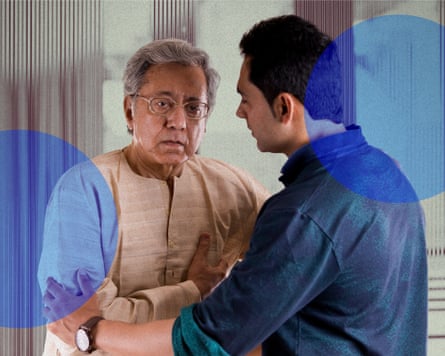
Their secret, he says, is dividing the work in ways that feel fair to them overall, not resentfully keeping score of every hour spent. "There are things that take lots of physical time, like driving to a hospital appointment, but how do you compare that with something that might be emotionally challenging but doesn't take so much time? I've heard other people say their siblings are quite performative about the work they do, like they'll let everyone know they did a particular task, and it becomes competitive."
Will's siblings live very close to their mother, so they call in regularly to see her and take the lead in a crisis. He lives further away, but unlike his siblings, he can work remotely, so he'll come regularly for weekends or move in temporarily in a crisis. Though sometimes the siblings argue, he says, they're broadly on the same page. But when I ask if the secret is just that they were always a close and happy family, the truth turns out to be complicated.
"She's not an easy person, and she's not a perfect mum. She's got a lot of mental health issues and there have been some really dysfunctional times," he says. But that seems, in turn, to have made the siblings a united front. "We care about each other and we like each other. We're the only ones that understand the idiosyncrasies of our family dynamic. It's given us – well, siege mentality is the wrong way of putting it. But we're all fighting the same issue together."
His advice to other siblings is to watch for signs of burnout: when his sister, who unlike them has small children, started feeling overwhelmed recently, Will and his brother held the fort temporarily without her. "It's just trying to be aware of how each other is feeling." What he's describing sounds like the thing that saved me from drowning in the last months of both my parents' lives: the knowledge that my younger sister and I were absolutely in this together, for which I am profoundly grateful.
For families keen not to fall out, Carers UK recommends breaking down the myriad tasks involved in care – from ordering repeat prescriptions or helping with a parent's finances, to midnight A&E trips – and matching each to a sibling's availability.
"It's true that the sibling living closest to a parent often visits more frequently and finds themselves taking on more responsibilities simply because of proximity," says Helen Walker, chief executive of Carers UK. "In reality, another family member could easily manage financial matters, coordinate other aspects of care, or do an online grocery shop, even if they don't live nearby." As she says, tech can also spare one exhausted sibling from carrying the entire mental load. My sister and I used a shared Google doc to brain-dump everything, but I wish we'd known about the charity's app Jointly, designed to help families track changes in medication, share updates and assign tasks. Last, while public services often prefer to have one official point of contact in a family, that doesn't always help siblings trying to do things equably, Walker notes: "It's important that efforts to share care are underpinned by the right help for carers themselves."
And if all else fails? Maybe just send the Saturday Night Live skit to your family WhatsApp, and hope they take the hint.
Names and identifying details have been changed throughout this article