The UK government has for a second time declined to use the Stormont Brake.
Unionist parties had asked the Secretary of State to use the post-Brexit mechanism to block updated EU customs rules from applying in Northern Ireland.
The brake is designed to give Stormont the power to object to amendments to EU rules that apply in Northern Ireland.
It was introduced by the UK government in 2023 in attempt to address unionist concerns about the "democratic deficit" in NI's Brexit deal.
It was the central part of a deal - known as the Windsor Framework - agreed between the UK and EU in 2023.
Why did unionists ask for it to be used?

Unionists believe the updated customs rules will mean more financial and technical burdens for smaller businesses bringing in goods across the "Irish Sea border" from Great Britain.
The Democratic Unionist Party (DUP) had said the changes could "deepen trade barriers between Great Britain and Northern Ireland".
The Traditional Unionist Voice (TUV) said the plans had raised "very serious problems".
DUP leader Gavin Robinson said while he condemned the Secretary of State's decision to not use the brake, "it was right for unionist MLAs to work co-operatively to raise our significant concerns".
What has the government said?
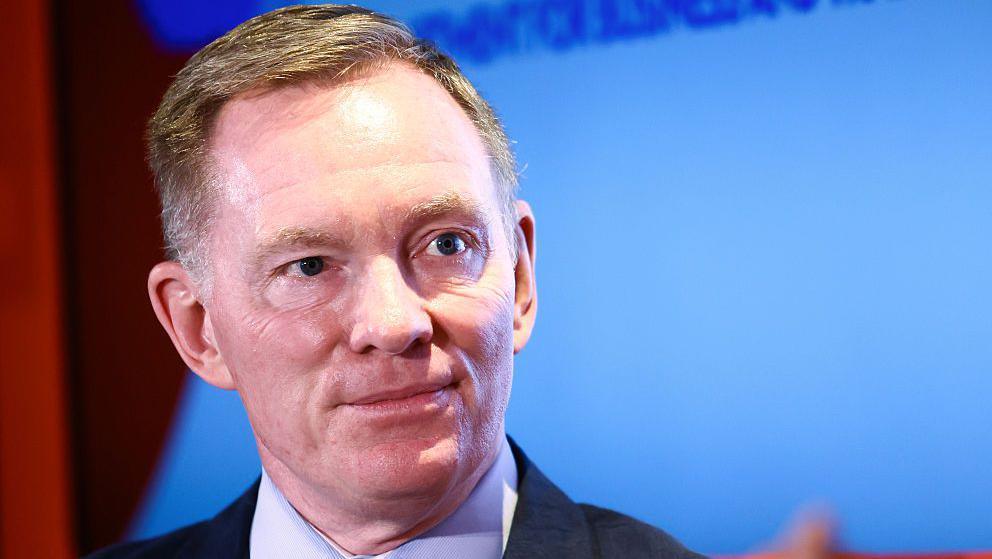
The Secretary of State, Sir Chris Bryant, has rejected those concerns.
He said the rules being challenged did not meet the key legal threshold for using the brake.
The law says the brake can only be used to block updated rules which would have a significant impact on everyday life in a way that is liable to persist.
What changes is the EU making?
The government had already reached agreement to mitigate one of the new rules which could have had significant impact on NI.
The EU is imposing new customs obligations on e-commerce businesses selling into the EU single market.
That could have meant a two euro (£1.67) handling charge on GB-NI parcels, but this has been avoided after an agreement between the UK and EU.
In December 2024 unionists asked for the Stormont brake to be used in a bid to stop changes to EU rules on packaging and labelling of chemicals.
But the government also rejected the request to formally trigger the brake, concluding the tests for using it had not been met.
How does the Stormont Brake work?

The Stormont Brake was designed to give MLAs a greater say before any amended EU rules could take effect in Northern Ireland.
Entirely new rules are dealt with under a similar process known as an applicability motion.
The brake can only be used in the "most exceptional circumstances and as a matter of last resort".
Those seeking its use must demonstrate that the rule being challenged would have a "significant" impact on everyday life in Northern Ireland.
If the government determines the conditions are met, it would formally notify the EU and the changed law would not apply.
There would then be "intensive consultation" between the UK and EU.
The Joint Committee - the UK-EU body responsible for overseeing the Brexit deal - would be required to discuss the rule in question.
Once those discussions concluded, the government could either send it back to the assembly for a cross-community vote or decide the rule should not apply in Northern Ireland.
At that stage, the government could still avoid a Stormont vote if it assessed there were "exceptional circumstances" including an assessment that the rule would not create a new regulatory border between Great Britain and Northern Ireland.
If the UK decided not to adopt the rule, the EU could take "appropriate remedial measures".