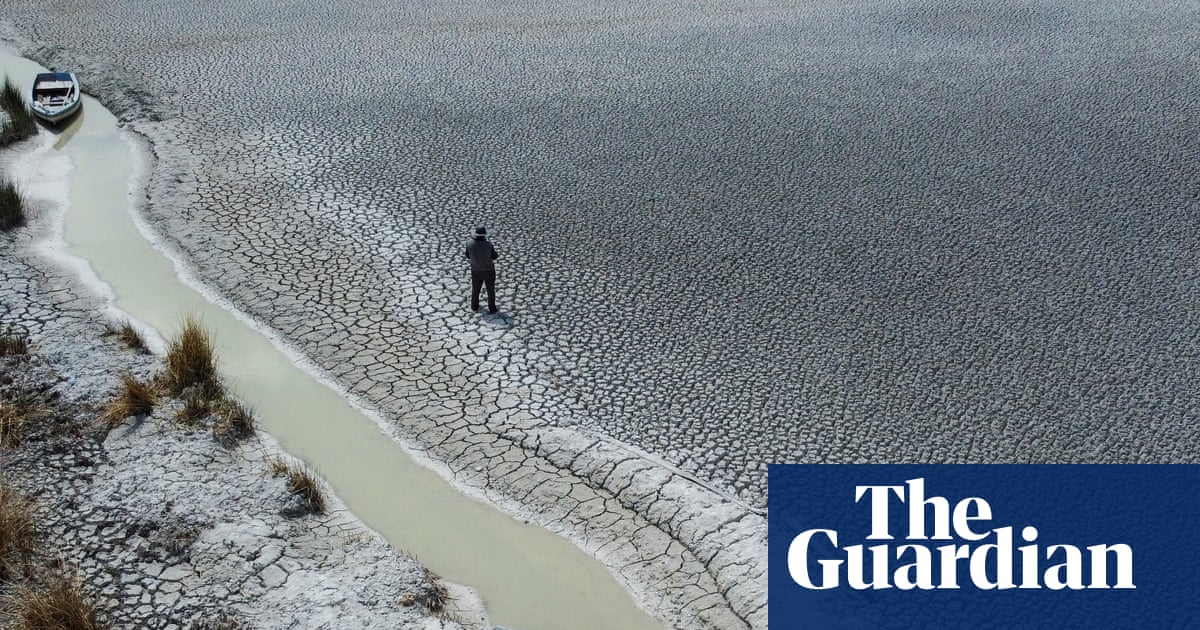
Extreme global heat caused an unprecedented decline in the water levels of lakes, rivers and reservoirs around the world in 2023 and 2024, an international study has found.
The analysis of global water systems, a collaboration led by the Chinese Academy of Sciences, found that the planet's surface freshwater fell sharply during the two years, which were the hottest on record. Global river flows fell to about 5.7% below normal, while the water stored in lakes and reservoirs dropped by 9.5%. Together, this was the largest synchronised decline in surface water since at least 1991.
As the planet warms, the water cycle becomes more extreme. A warmer atmosphere pulls more moisture out of soils, rivers and lakes, and hotter land speeds up evaporation even further. That moisture then falls as heavy rain elsewhere, often over oceans, causing sharper swings between drought and flood. This meant that during 2023-24, rivers ran low even in places hit by severe flooding.
To reach their findings, the researchers combined river flow measurements from 150 of the world's major river basins with satellite data tracking more than 1.2m lakes and reservoirs between 1991 and 2025.
Dr Sulagna Mishra, one of the study's authors, said: "The findings highlight an important paradox of climate change: a warmer atmosphere does not necessarily mean more water is available on land. Although global precipitation increased during this period, much of the additional rainfall occurred over the oceans, while many land regions experienced significant deficits."
The effects were particularly pronounced in South America, where river flows dropped by 17.8% and water in lakes and reservoirs fell by 16.5%, even as some areas experienced extreme rainfall and flooding.
Dr Yi He, an associate professor in hydrology and climate change research at the University of East Anglia, said: "Parts of South America experienced severe flooding in 2023-24, yet the continent's rivers carried much less water than usual over those two years. A river can flood during a downpour and still run low for much of the year."
Water supplies around the world are facing multiple threats, including the super El Niño, droughts driven by the climate crisis, pollution and overexploitation.
The study's findings showed how exposed the world's water supplies were, the authors said. They said changes to fresh water were one of the main ways the climate crisis affected people and nature, and as the planet continued heating, it was becoming harder to predict how much water would be available.
Prof Christian Dunn, the chair of the British Ecological Society's policy committee, said: "What's particularly worrying about these findings is just how quickly our freshwater resources can decline, even in parts of the world we traditionally think of as being wet. And, as this study shows, just because we're experiencing floods doesn't mean we're water secure."
Prof Richard Allan, a climate scientist at the University of Reading, said the unprecedented fall in global river flows and lake levels confirmed that the damaging swings between wet and dry extremes already being felt could now be seen in water systems across the planet's land surface.
He said: "This climate whiplash and its impacts on people will continue to worsen until we stabilise the climate by cutting greenhouse gas emissions."